Grain, Vitality, and the Lamarckian Lens: An Essay on Diet, Environment, and Cultural Morphology
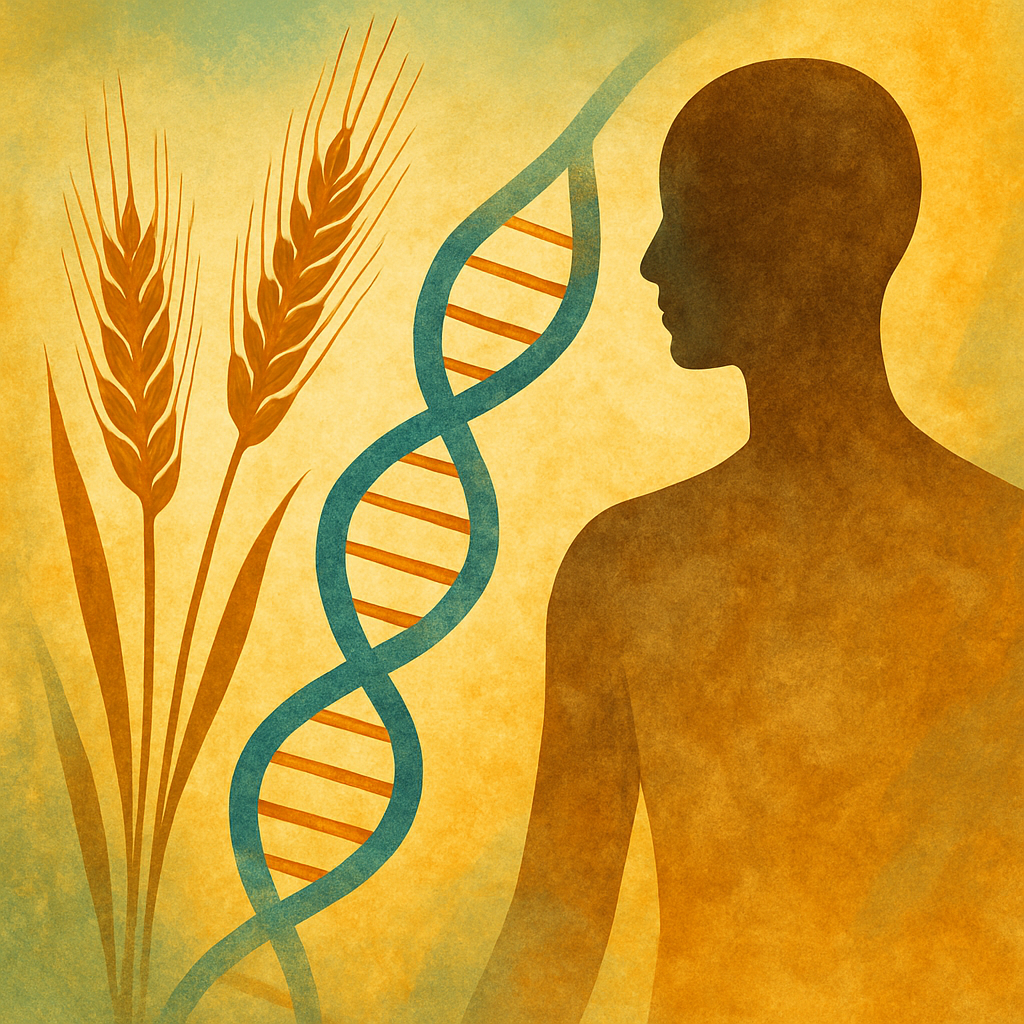
“The most emaciated, low-vitality cultures that racists berate eat the most grain.”
This is an ugly observation. The kind of statement that hangs in the air, thick with the weight of unsavory history. The typical response is to recoil, to dismiss it as a crude stereotype and nothing more. But what if, instead of dismissing it, we dared to dissect it? What if we could flip this ugly statement from a tool of racial prejudice into a fruitful scientific question?
The thesis is this: heavy dependence on grain is both a cause and a symptom of ecological stress. It re-sculpts human physiology, microbial ecologies, and even our cultural institutions in ways that can be misread as innate “low vitality.” The resulting phenotype is not a racial essence, but a predictable, and crucially, reversible eco-morphological outcome.
We will explore this through a neo-Lamarckian lens, seeing how the environment writes itself onto our very biology.
The Ghost of Lamarck: Environment is King
For over a century, Jean-Baptiste Lamarck was a ghost in the halls of biology, his theory of “inheritance of acquired characteristics” dismissed as a scientific dead-end. The idea that an organism’s experiences could be passed down to its offspring was crushed by the elegant certainty of Darwinian natural selection and Mendelian genetics.
But the ghost is back. Contemporary biology has rehabilitated Lamarck’s core intuition through the hard science of epigenetics. We now know that the environment is not a passive backdrop but an active sculptor. It leaves chemical marks on our genes—DNA methylation, histone modification—that can alter their expression without changing the code itself. These changes can be passed across generations.
Furthermore, we are not individuals but ecosystems. The hologenome (our body plus its trillions of microbes) evolves with breathtaking speed. Dietary pressure can reshape our gut microbiome in a matter of weeks, producing metabolic phenotypes that are passed down from mother to child.
The implication is profound: a persistent environmental input, like a high-grain diet, acts as a continuous signal that relentlessly re-tunes human biology over generations.
The Tyranny of the Cereal: A Body Under Siege
Grain is a Faustian bargain. It offers calories in abundance, the fuel for civilization and surplus. But the price is paid in the currency of vitality, a slow-burn tax on the human machine.
Grain as Ecological Stress Signal
Agrilogistics and Nutrient Dilution
Cereals provide calories at low energetic cost to the farmer, but they dilute micronutrient density (Fe, Zn, B12, DHA, retinol). Populations that exceed ~60% of calories from grain enter a state of “hidden hunger”: adequate or even excessive caloric intake coupled with multiple micronutrient deficits. Clinical signs—stunting, dental crowding, anemia, low muscle mass—are often misread as racial markers rather than nutritional epiphenomena.
Phytochemical Load and Endocrine Suppression
Whole grains deliver antinutrients (phytates, lectins), which chelate minerals and systematically suppress our hormonal machinery. Recent research confirms that phytic acid significantly reduces absorption of essential minerals like zinc, iron, and calcium (Chondrou et al., 2024). These compounds down-regulate IGF-1, testosterone, and thyroid hormone—the very hormones that drive vitality, growth, and metabolic fire.
Microbiome Collapse
A gut raised on grain is a shadow of its ancestral potential. High-grain diets foster what the Sonnenburgs call “microbiome extinction”—a collapse in microbial diversity that cascades through generations (Sonnenburg & Sonnenburg, 2019). The resulting dysbiotic ecosystem is poor in butyrate-producing bacteria and rich in inflammatory taxa. This isn’t just digestive—it’s systemic. The gut-brain axis means a compromised microbiome translates to compromised cognition, motivation, and physical vigor.
Sociocultural Lamarckism: How Grain Shapes Civilization
The grain effect transcends individual biology. It inscribes itself into the very fabric of society, creating what we might call “sociocultural Lamarckism”—the inheritance of acquired cultural characteristics.
- Labor and Energy: High-grain societies can feed vast populations, but only by shifting labor toward repetitive, low-mobility tasks like threshing, milling, and cooking porridge. Daily energy expenditure plummets, reinforcing the low-metabolic phenotype.
- Symbolic Coding: Culture sacralizes the staple. Wheat becomes the “hair of Demeter,” rice a “gift from the gods.” These are not mere metaphors; they are memetic structures, a form of cultural epigenetics that “marks” the environment, ensuring future generations default to grain even when better options arise.
- Gene-Culture Coevolution: Our genes have responded. Alleles for salivary amylase (AMY1) and Type-2 Diabetes risk (TCF7L2) show frequencies that perfectly mirror the historical spread of agriculture. This isn’t racial determinism; it’s a textbook case of culture driving genetic change.
The Farmer’s Grind, The Hunter’s Soul
The shift to a grain-based existence did more than reshape our bodies and societies; it fundamentally altered our conception of virtue. We have not just adopted the farmer’s diet; we have sanctified his mode of labor, enshrining it as the sole paradigm of productive life.
Society has moralized different kinds of work. Farming Labor looks like “hard work”—slow, grinding, consistent effort. You can see the sweat. It aligns with the Protestant work ethic that underpins much of Western capitalism. We are taught that this visible, consistent grind is inherently virtuous.
Hunting Labor, by contrast, often looks like long periods of idleness or observation followed by a short burst of intense, violent action. The hunter might spend 99% of his time tracking, waiting, and thinking, and 1% of his time making the kill. To the farmer, this looks like laziness punctuated by recklessness.
But consider this: all the great cultures of history had their initiation ritual of boys to men in the form of the hunt, not at the plow. The hunt was the crucible where boys became men, where they learned to face death, to make split-second decisions, to embody the fierce vitality that civilization demands but cannot cultivate.
This is a source of much of the misery of the 21st century. We have created a world that rewards the farmer’s virtues—patience, compliance, repetitive execution—while systematically destroying the hunter’s: spontaneity, aggression, the willingness to take decisive action in the face of uncertainty.
A tiger whose teeth never bite eventually becomes blunt. A man whose instincts are never tested becomes domesticated, docile, weak. The grain-based world doesn’t just starve us of nutrients; it starves us of the very experiences that forge character and vitality.
The Empirical Record: Vitality Restored
The beautiful thing about the Lamarckian perspective is its optimism. If environmental inputs shaped us, then changing those inputs can reshape us again. And the evidence is compelling:
- Nutritional Rescue: Children moved from high-grain to nutrient-dense diets show dramatic improvements in growth, dental development, and cognitive function within a single generation.
- Microbiome Recovery: Introducing fermented foods and diverse plant fibers can restore gut microbial diversity in weeks to months, with corresponding improvements in mood, energy, and immune function.
- Epigenetic Reversal: Changes in diet and lifestyle can modify gene expression patterns, effectively “turning off” the metabolic programming of scarcity.
When the inputs change, the phenotype shifts within years or decades—far faster than genetic selection allows.
The apparent “emaciation” of a grain-dependent people is not a racial verdict. It is an ecological disease. And it is curable.
Conclusion: From Fatalism to Agency
The grain hypothesis is not about hierarchy or determinism. It is about understanding the profound ways in which environment shapes biology and culture. By recognizing that “low vitality” is not an innate racial characteristic but an ecological response, we shift from black-pilled fatalism to environmental agency.
We are not written in stone, but in soil. Biology is not destiny; ecology is. By replacing fatalism with agency, we can reclaim the vitality that is our shared human birthright.
The path forward requires courage—the courage to question the sanctified staples, to challenge the moralized modes of labor, and to remember that civilization’s greatest achievements came not from the plow but from the untamed human spirit that refuses to be domesticated.